
Last week, Vermont recognized the ongoing flood exposure facing the state with the passing of July 10, a now-infamous date for Vermont. In the weeks that followed July 10, 2023, the Vermont Bond Bank (Bond Bank) collaborated with partners to develop the idea that would become the Municipal Climate Recovery Fund. To date, the program has lent more than $33 million to 27 municipalities to assist in recovery.
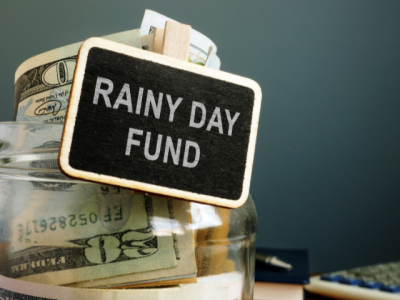
The Vermont Bond Bank (Bond Bank) today adds to this track record of assistance with the release of the "Town Highway Disaster Reserve Benchmarks," a financial planning tool and online database that help municipalities estimate how much to set aside to withstand the cost of extreme weather damage to local roads and bridges. An accompanying risk management white paper and primer give communities and policymakers more information on how to put these benchmarks to work.
The benchmarks rely on FEMA data that was combined with the Bond Bank’s database of municipal financial statements for the analysis in the white paper. The findings are encouraging: the typical Vermont community needs to set aside less than 1% of its annual budget to meet its benchmark. Federal policy uncertainty clouds this picture, as this amount would quadruple without FEMA assistance, and more than 40% of towns would need to use more than half of their annual budget to cover losses from a large event.
The Reserve Benchmarks draw on 15 years of inflation-adjusted FEMA Public Assistance data and VTrans’ Transportation Resilience Planning Tool, giving each town, city, and village a data-driven estimate of the annual contribution needed to build an adequate disaster reserve.
The Benchmarks are the first in a planned series of Bond Bank tools and programs to further disaster resilience within the state.
The full white paper and database are available at: https://www.vtbondbank.org/reservebenchmarks.
About the Vermont Bond Bank
Created in 1969 as the nation’s first state bond bank, the Bond Bank helps finance and implement crucial municipal infrastructure at lower costs to communities by providing access to more affordable capital.
The Bond Bank does this by overcoming gaps in information, scale, and credit to allow cities, towns, villages, school districts, and other forms of government to achieve equitable access to capital. This market specialization also helps with expertise in recognizing emerging needs like flood relief and managing federal requirements for faster and easier access to capital.
In addition to facilities and infrastructure lending, the Bond Bank also provides post disaster bridge loans and is the financial administrator of the State of Vermont Clean and Drinking Water State Revolving Loan Funds.
Contact: michael@vtbondbank.org