
USDA Rural Development has two grant programs for rural communities. Applications are accepted on an ongoing basis for both programs. Contact Dianne Drown, Community Program Specialist, Dianne.Drown@usda.gov, before pursuing an application to either program.
Emergency Community Water Assistance Grants
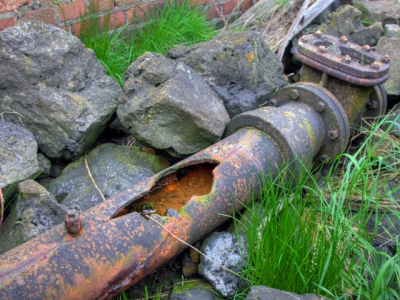
The Emergency Community Water Assistance Grants helps eligible communities prepare, or recover from, an emergency that threatens the availability of safe, reliable drinking water. Applicants must show that a major decline in quantity or quality of water occurred within two years of the date of the application. Grants are also awarded when a significant decline in quality and quantity of water is imminent.
- Water transmission line grants fund up to $150,000 to construct waterline extensions, repair breaks or leaks in existing water distribution lines, and address related maintenance necessary to replenish the water supply
- Water source grants fund up to $1,000,000 for the construction of new wells, reservoirs, transmission lines, treatment plants, and/or other sources of water (water source up to and including the treatment plant).
Eligible entities are rural areas and towns with populations of 10,000 or less. Must also have a median household income of no more than 100 percent of a state’s non-metropolitan median household income.
Special Evaluation Assistance for Rural Communities and Households Grants
The SEARCH - Special Evaluation Assistance for Rural Communities and Households Grant provides funding to financially distressed rural communities to pay for predevelopment feasibility studies, preliminary design and engineering analysis, and technical assistance and environmental impact analysis to develop applications for financial assistance for water and waste disposal projects.
Areas to be served must be rural with a population of 2,500 or less and be financially distressed (median household income below the poverty line or less than 80 percent of the statewide non-metropolitan median household income based on latest Census data).
Predevelopment planning costs must be related to a proposed project that builds, enlarges, extends, or improves rural water, wastewater, solid waste, or storm water disposal facilities.