

Testimony to the House Committee on General Affairs and Housing
Regarding Housing Policy Priorities
Samantha Sheehan, Municipal Policy and Advocacy Specialist, VLCT
January 7, 2026
Today's Testimony
- Brief overview of VLCT 2026 Legislative Priorities
- Short-Term Rental Regulation
- Act 181 Implementation Update
- VLCT recommended actions re: Act 181
- What is going well, supporting new housing creation
- Other ideas and discussion
Build Housing
Support the creation of the new housing that municipalities need, have envisioned and planned for, and allow in local zoning.
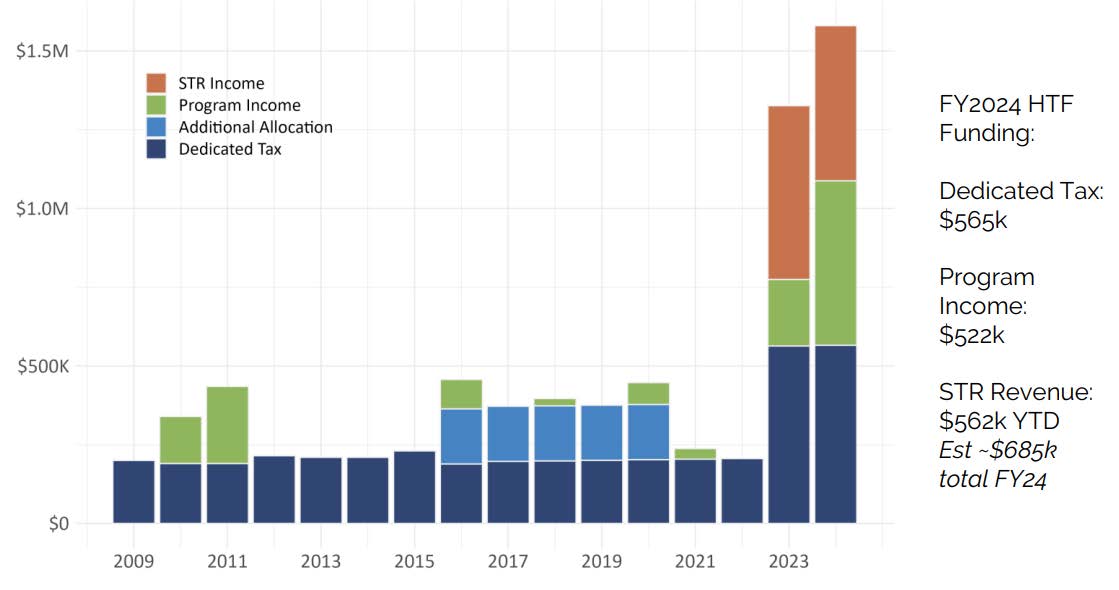
- Allow for new municipal authority to impose taxes and raise fees to regulate short-term rentals.
- Match state property tax relief with municipal stabilization agreements to support infill-scale housing development.
- Accelerate brownfield cleanup and redevelopment.
- Further limit appeals of housing projects within Tier1 areas.
- Extend temporary Act 250 exemptions and delay implementation of the Road Rule and Tier3 jurisdiction.
- Eliminate requirements for municipal enforcement of existing Act 250 permits within Tier1A areas.
- Exempt agricultural activity from municipal regulation, except for in Act 250 exempted areas.
Local Regulation of Short-Term Rentals
Allow for new municipal authority to impose taxes and raise fees to regulate short-term rentals (STRs).
Municipalities regulate STRs for a variety of local impacts:
- Owner occupancy
- Emergency contacts
- Fire Safety
- Onsite wastewater permits
- Days rented per month, year
Act 181 Implementation for Location-based Jurisdiction of Act 250
The regional housing targets established in the HOME Act acknowledge that every city and town has a role to play in meeting Vermont's housing goals. Few Vermont municipalities will achieve full Act 250 exemption for Tier 1a areas – while the majority of Vermont communities will experience substantial new jurisdiction per the "road rule" and Tier 3 mapping.
- Likely, 10 – 12 communities will be ready to apply for Tier 1a designation following the initial FLU mapping
- Total estimated land area eligible for Tier 1 is less than 3%
- Per county, eligible areas in draft FLU mapping ranges from .5% (NEK) to 11% (Chittenden)
Welcome to Pittsford!
General Information
- 44 square miles
- Population less than 3,500
- Municipal water & sewer system
- Town manager and five-member selectboard
- Municipal plan, zoning and bylaw
- Route 7, between Middlebury and Rutland
- Nicknamed "Sunshine Village"
- Home to the Vermont State Police Academy
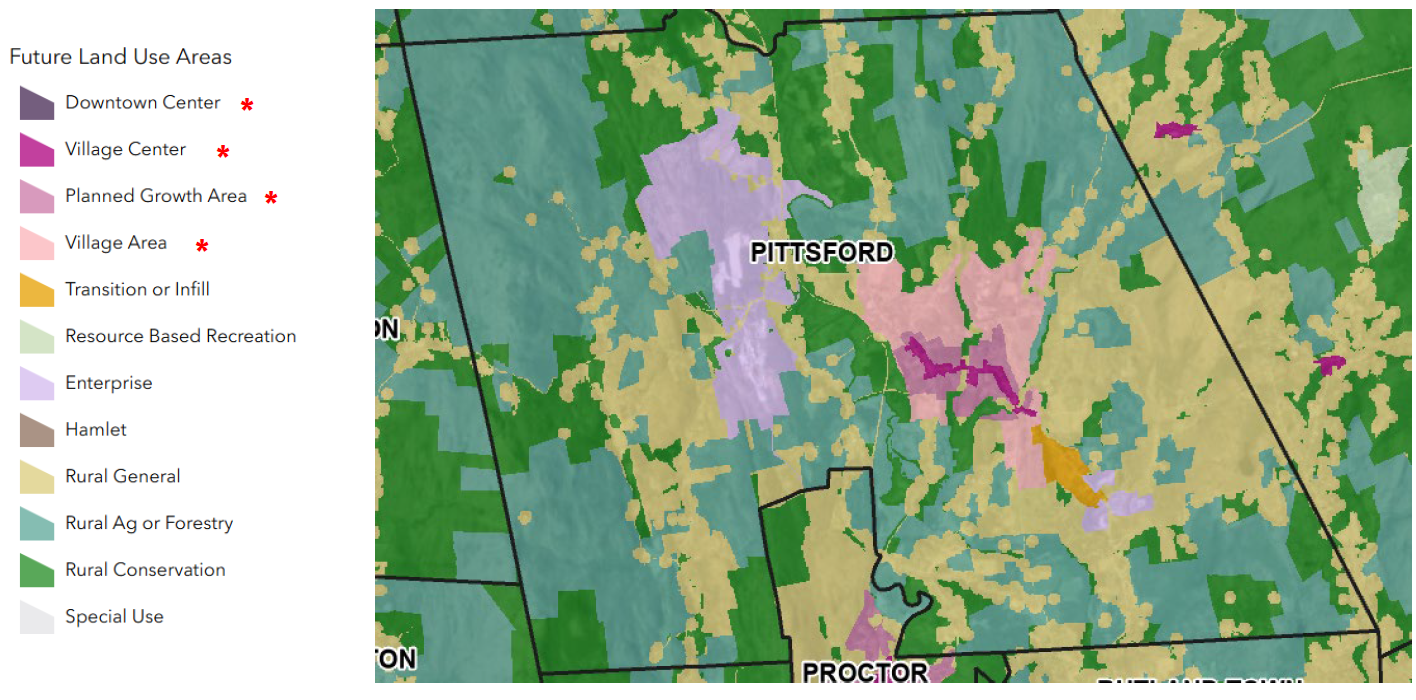
Regional Future Land Use Mapping Example
Red asterisks show which use areas are eligible for Act 250 exemption in Tier 1a or 1b if other statutory criteria are satisfied
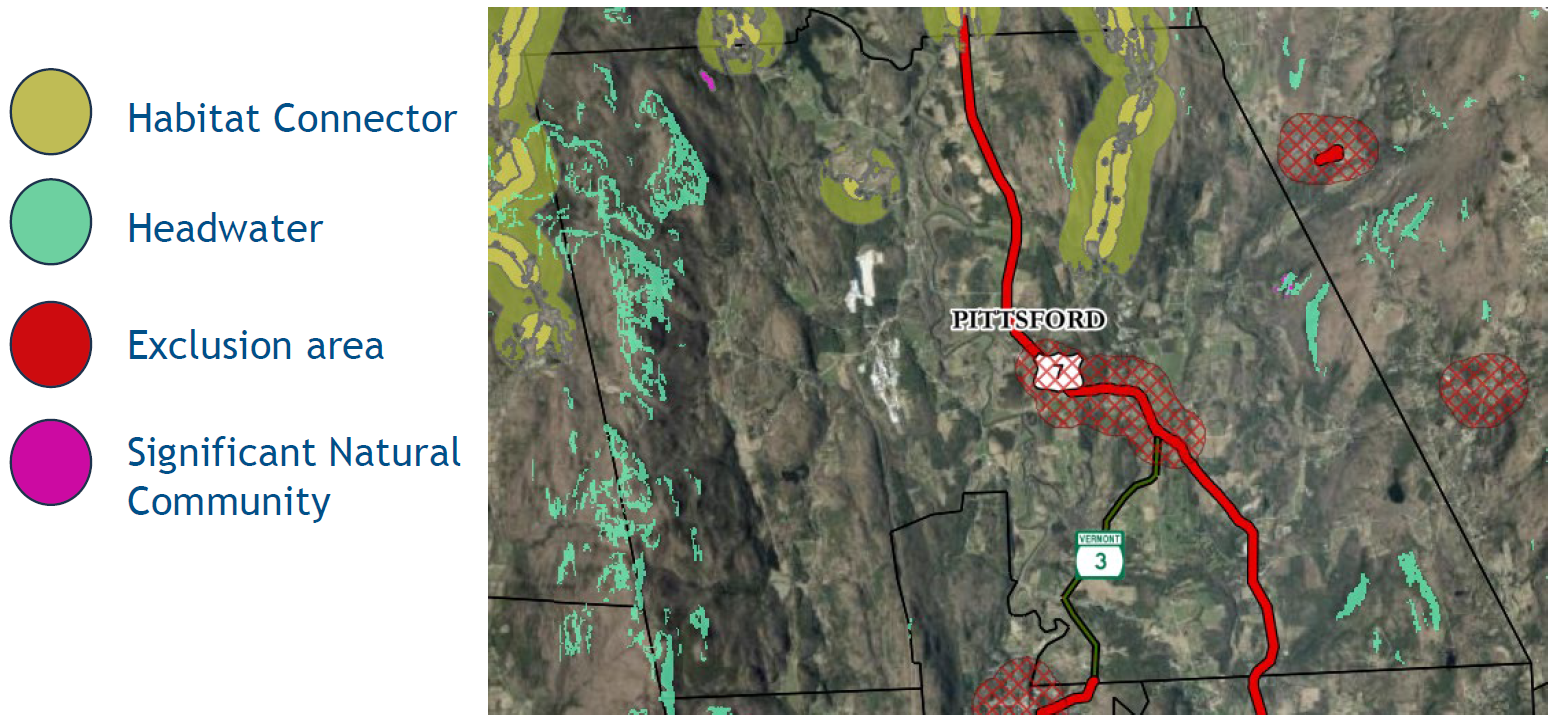
Draft Tier 3 Mapped Area Example
Road Rule 800ft Modeling Example
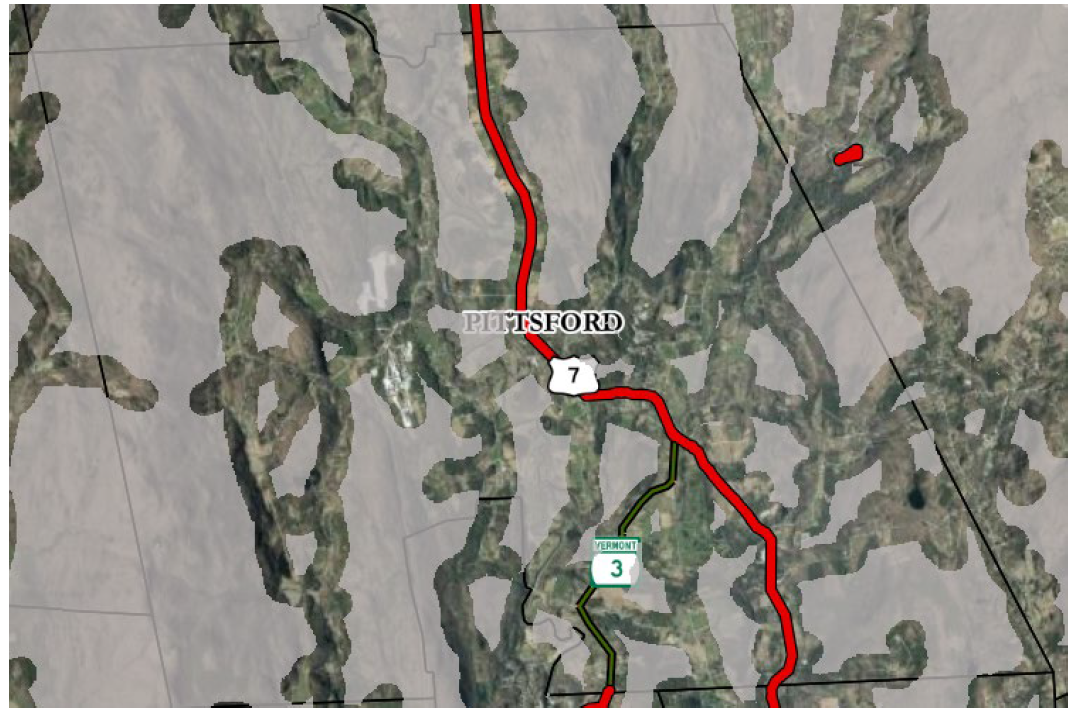
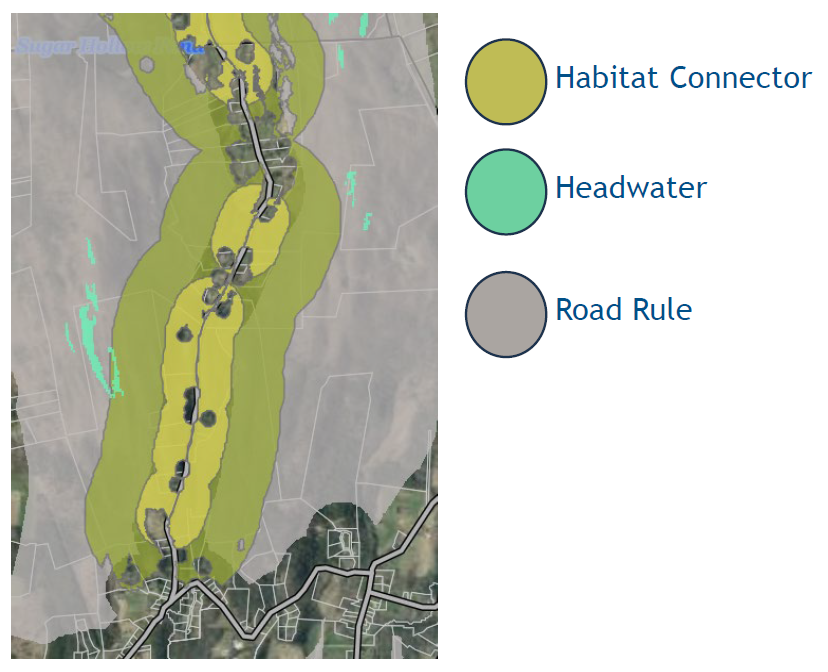
Road Rule + Tier 3 example: Sugar Hollow Road, Pittsford
The road rule: applies Act 250 to existing forest blocks and encourages new development to happen within 800 feet of an existing road.
Tier 3: includes“habitat connectors”, new areas around roads where the majority of land on both sides has tree canopy and is considered a high priority forest connectivity block (per Vermont Conservation Design). This may include significant stretches of state highway and Class 2 roads.
What Type of Development Will be Subject to Act 250 Review?
Act 181 grants the authority for, and directs, the LURB to determinewhat type of development will be subject to review in the new Tier 3 jurisdictional areas. The final rule could extend jurisdiction to include:
- Improvements to existing homes & structures: The current draft exempts only construction with a total footprint under 200 sq ft or within 50 ft of an existing structure.
- Construction of new wastewater treatment and drinking water systems.
- New homes & structures: regardless of size or density (not 5-5-10 rule)
- Roads, driveways,and utilities: The current draft exempts only construction or improvements for transportation and utility purposes that are entirely within 50 ft in any direction of roads.
- Trails: The current draft exempts only new trails less than 100 feet in length, or maintenance of an existing trail within 10 feet.
Recommended Actions Related to Act 181 Implementation
- Extend temporary Act 250 exemptions to 2030, unless or until a Tier 1a or Tier 1b area is approved
- Delay implementation of the Road Rule and Tier3 jurisdiction to 2028
- Eliminate requirements for municipal enforcement of existing Act 250 permits within Tier1A areas
What is Working Well?
- Temporary Act 250 exemptions
- Municipal Planning Grants
- VHIP
- Brownfield Redevelopment
- TIF / CHIP
Links and Resources, Municipal Planning & Zoning
- Municipal Charters(opens in a new tab)
- Title 24 Chapter 117(opens in a new tab): Municipal Planning and Development
- Municipal Plans and Bylaws Database(opens in a new tab)
- TROC Town Plan Adoption and Manual(opens in a new tab)
- Essentials of Local Land Use Planning and Regulation Handbook(opens in a new tab)
- 10 Acre Towns List(opens in a new tab)
- 10 Acre Town Check List(opens in a new tab) (required zoning bylaws)
Links and Resources, Act 181
- Future land use map viewer(opens in a new tab)
- Tier 1a guidelines(opens in a new tab)
- Tier 3 draft rule 2.1
- Tier 3 map viewer(opens in a new tab)
- VLCT webinar: Road Rule & Tier 3 (recorded)
Of the 251 Municipalities Represented by VLCT:
- 8 have mayors (only 2 are "strong mayor")
- 66 have a city, town or village manager
- 73% have a population under 2,500, and most of these municipalities are governed by volunteers.
- 200 have adopted a Municipal Plan
- 142 “10 Acre Towns” have adopted Zoning and Bylaw
- 89 chartered cities, towns and villages
- 43 operate water and sewer
Who Creates and Administers Municipal Regulatory Systems?
- Advisory Body: Often, the municipal plan and new bylaw processes begin with a citizen advisory committee such as the Planning Commission. Some communities have additional advisory bodies such as Electric or Energy Commissions or Housing Committees.
- Legislative Body: The City Council, Selectboard, Board of Alderman, or Board of Trustees. The legislative function involves not only drafting and approval of the municipal plan, bylaws, and ordinance but also conducting public hearings. Actions of the legislative body are governed by numerous laws that ensue public access and transparency including Ethics Law, Public Records Law, and Open Meeting Law.
- Appropriate Municipal Panel: A citizen layboard that serves a quasi-judicial role to interpret local law and serve as the local appellate body, such as the Design and Review Board or Zoning Board.
- Administrator: Typically, a municipal staff person responsible for permitting, enforcement, inspection, and educating and assisting applicants. Most often this would be a Zoning Administrator, but could be a permit specialist, technician, or compliance officer.
Writing the Rules
Zoning Bylaws may be created to enforce the municipal plan within the authorities prescribed by state law.
- The Municipal Plan: is developed through a citizen led process, adopted by the legislative body, shared with statutory parties, and then must be approved by the RPC and DHCD. Each action of a local body and subsequent amendments require a public hearing. The Plan must contain 12 elements required by state law.
- Zoning and Bylaw: Many state preemptions exist to limit bylaw authority. Some charters require additional process. For substantial zoning changes additional outreach, long drafting and periods of deliberation, research, feasibility study, assessing infrastructure capacity, joint hearings, etc. are typical
- At a minimum, to adopt or amend a bylaw the appropriate municipal panel must:
Publish a public report, consistent with municipal plan
Hold a public hearing
15-day notice period and statutory notices