
Last week more than 20 municipal officials enjoyed a day of action at the Vermont State House and a rare moment of excitement – an actual fire evacuation(opens in a new tab)! The fire alarm on Thursday was caused by an elevator's malfunction, the evacuation was brief and well managed, and no one was injured. Pretty soon, everyone was back to business – which for VLCT included raising a different kind of alarm over state transportation funding.
In this Weekly Legislative Report, we recap the events of the municipal advocacy day and joint transportation hearing for town highway funding, summarize the Senate’s appropriations plan, and provide an update on appropriations of the PILOT Special Fund and Local Option Tax Revenues(opens in a new tab).
On Thursday, April 23, municipal officials from across the state joined VLCT at the State House for a day of advocacy and action. Local leaders from Brattleboro to Newport and many places in between gathered at the State House to meet with key legislators and to network with each other.
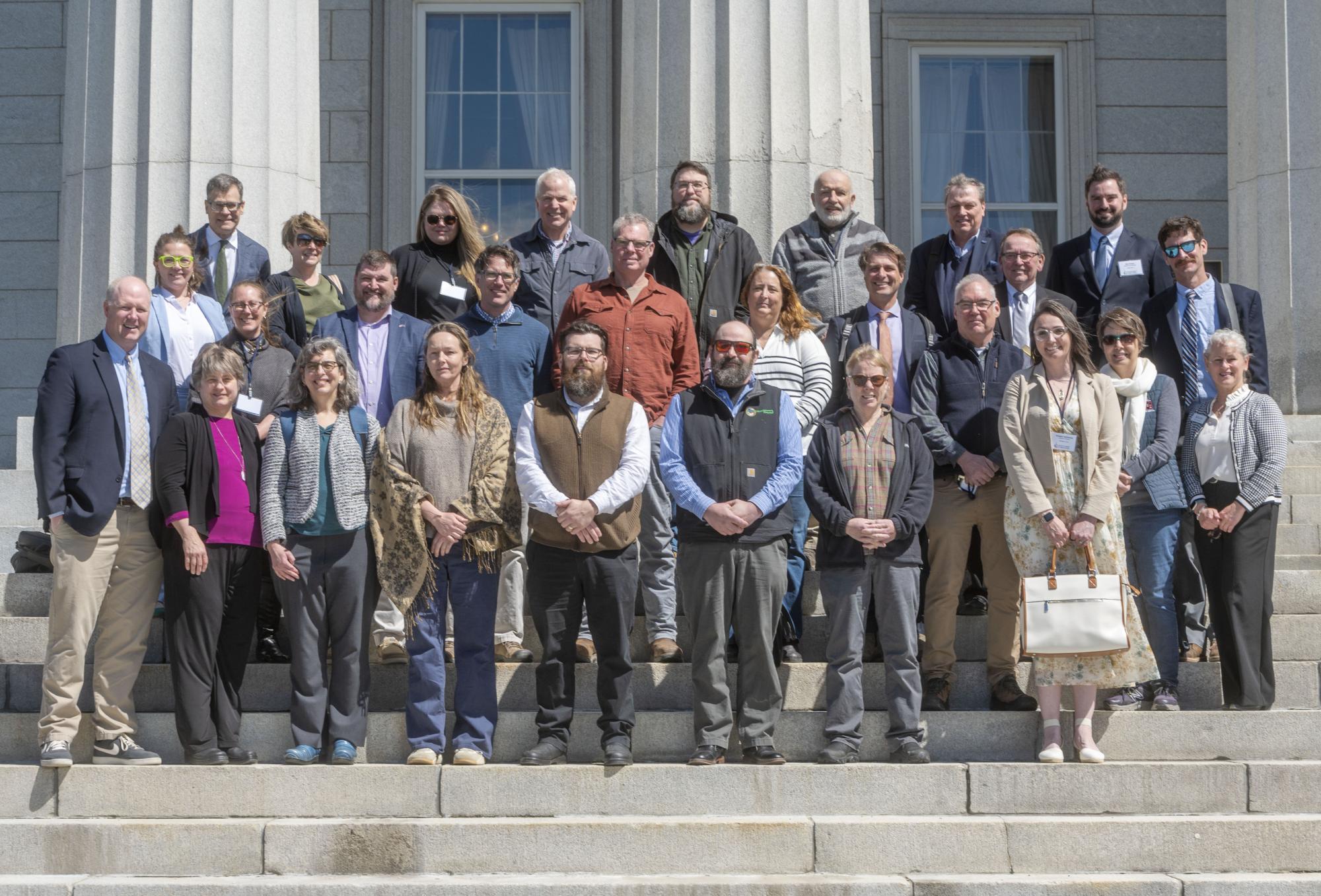
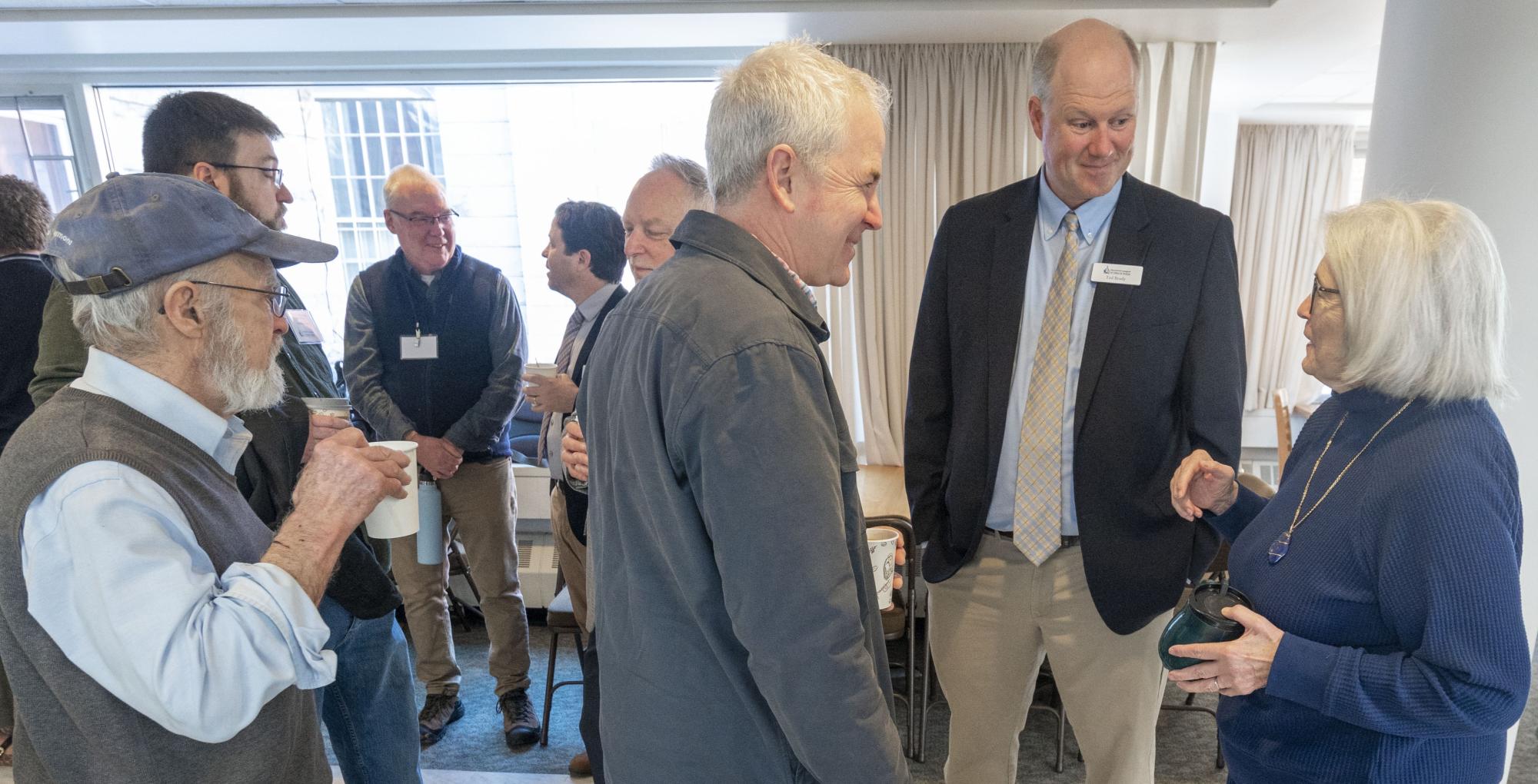
Our advocacy day began in the State House cafeteria over coffee and breakfast, where many lawmakers came by to visit with municipal officials and VLCT staff. Joining us were several members of VLCT’s administrative team, Municipal Assistance Center, and Municipal Operations Support teams. Several visiting VLCT members had the opportunity to meet one-on-one with their local representatives to discuss the issues most important to their communities.
After breakfast, we spent the morning participating in a joint hearing of the House and Senate Transportation Committees (more on that below), before returning to the VLCT offices for an in-person Advocacy Chat. Together, municipal officials from across the state discussed effective strategies to support VLCT’s advocacy work, current legislative proposals before the legislature, and ideas for future policy initiatives VLCT could champion to support the 21st century challenges facing local government. Our policy discussion ranged from land use, to taxes, to equipment purchasing, to the rising cost of healthcare.
VLCT’s 2026 Municipal Advocacy Day was an all-around engaging, impactful, and exciting event. It is clear that the best tool we have to help advance critical policy in the State House is you – our members!
If you weren’t able to join us in person, it's not too late to join in our collective efforts. You can find links to testimony shared by local officials (below) and share their comments with your local lawmakers. You can also submit written testimony and letters of support for key bills, or schedule a springtime visit to Montpelier – well before the end of this legislative session.
Check out VLCT’s Effective Testimony Guide(opens in a new tab) to learn more about how to plan effective advocacy efforts and for tips and tricks for making the most of your visit to the state capital.
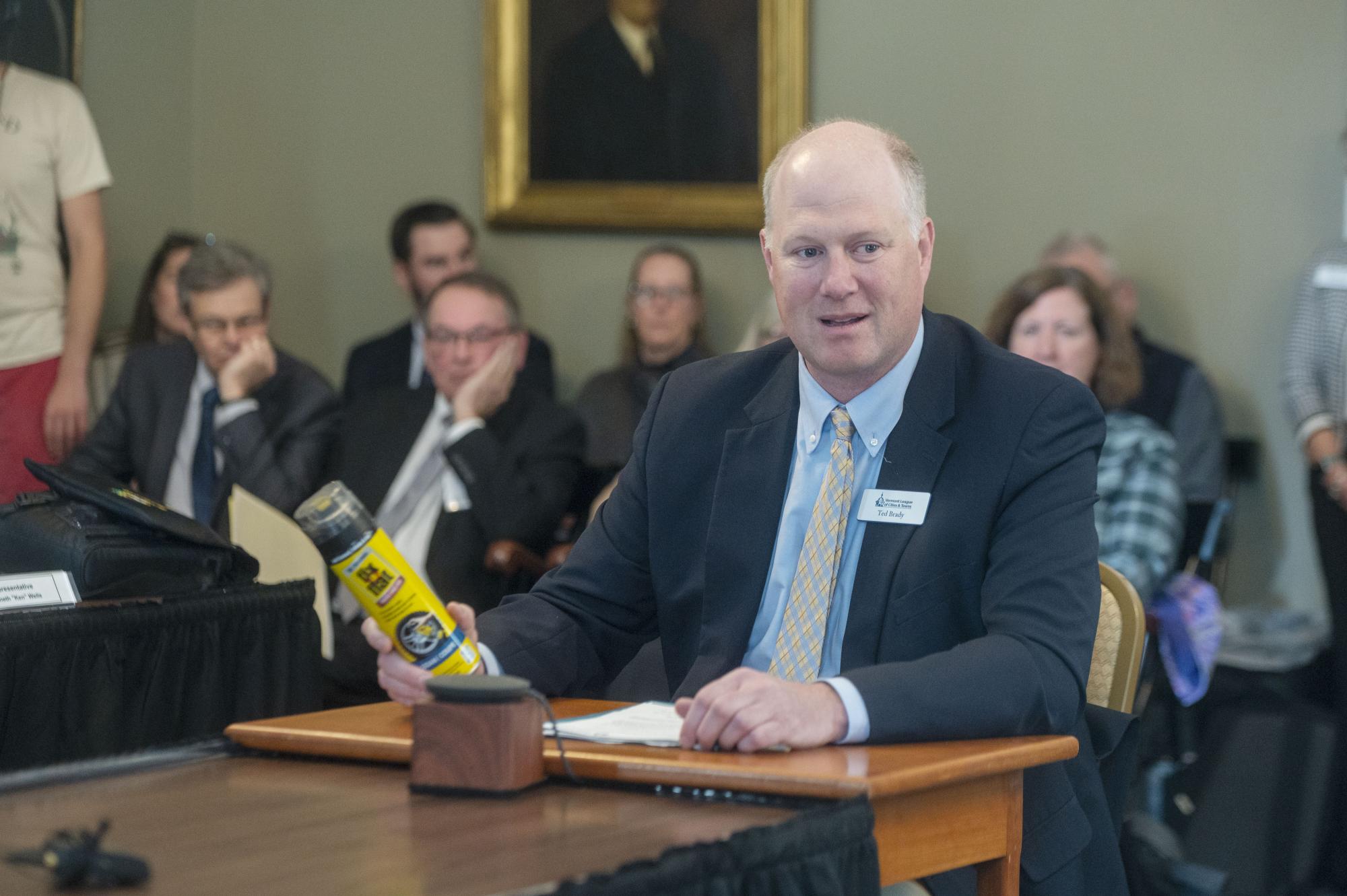
The morning of Municipal Advocacy Day, the House and Senate Transportation Committees hosted a joint meeting to hear testimony from municipal officials about town highway funding and other local transportation issues(opens in a new tab).
VLCT Executive Director Ted Brady kicked things off by highlighting that in Vermont, 83% of Vermont’s roads are owned and maintained by cities and towns and only 17% are owned and maintained by the state, while only about 10% of Vermont’s nearly $1 billion transportation budget is spent to maintain town highways and structures. Ted repeated VLCT’s calls to grow and diversify transportation funding revenues, saying, “like many Vermonters, I carry a can of Fix-A-Flat and a Triple A card because potholes, rough surfaces, and road hazards are becoming more and more common. Carrying a can of Fix-A-Flat is a poor excuse for a transportation policy.”
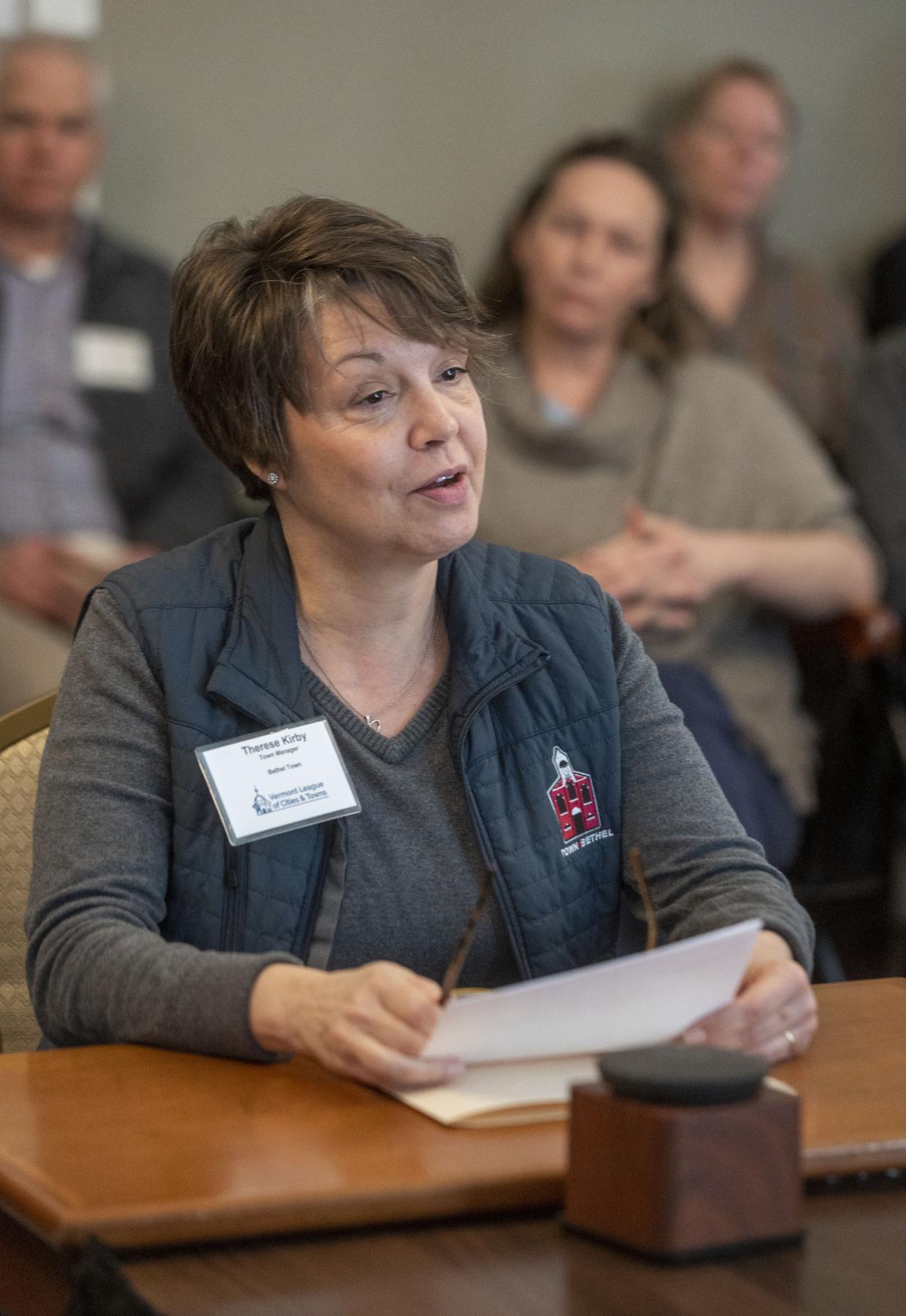
For most Vermont municipalities, maintaining safe road conditions is the number one budgetary pressure that drives the municipal tax rate. Municipal officials who provided testimony included: Thomas Lauzon, Mayor of the City of Barre; Jordan St.Onge, Highway Superintendent of the Town of Morristown; Therese Kirby, Town Manager and Road Commissioner for the Town of Bethel(opens in a new tab); Kyle Row, Clerk/Treasurer of the Town of Panton; Nell Gwin, a selectboard member for the Town of Royalton; and Kari Bradley, Town Administrator, Treasurer, and Road Commissioner of the Town of Calais(opens in a new tab).
You can watch testimony from Ted, Thomas, Jordan, Therese, Kyle, and Kari online here(opens in a new tab) and see Nell discuss the challenges Royalton is facing(opens in a new tab) as a result of the Fox Dam Bridge closure.
Jordan, a highway superintendent, explained how delayed maintenance of paved roads can exponentially increase the cost. Paving roads that are in good to fair condition costs about $50,000 per mile, while paving roads that are in very poor condition currently costs $287,000 per mile— a cost increase of more than 400%. As Jordan said, “The math of road maintenance is simple but punishing: the longer we wait, the more it costs.”
While both transportation committees have acted this biennium to ensure that future town highway funding is level and to close the overall revenue gap in the transportation fund, the problems caused by chronic underfunding for transportation are already severe. The Vermont Agency of Transportation has forecasted that at current funding levels, half of all paved roads will be in poor or very poor condition by 2035.
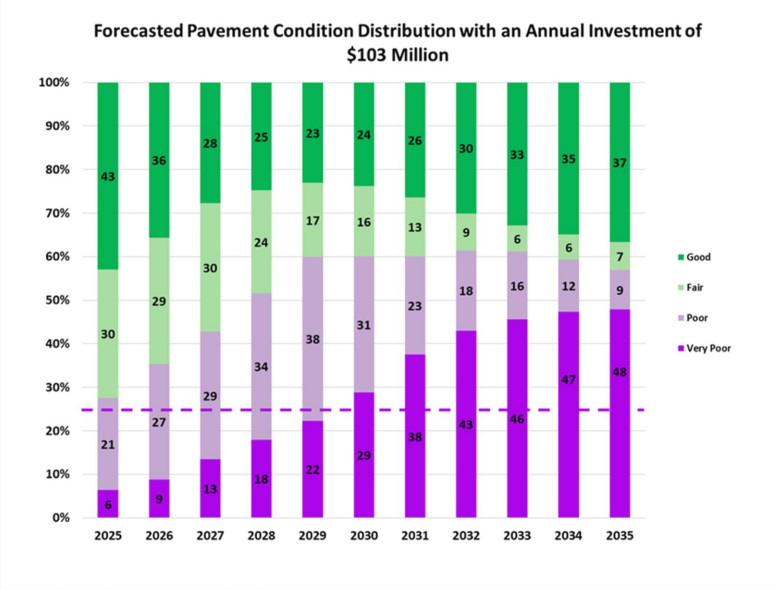
Two weeks ago, the Senate Transportation Committee advanced the annual transportation bill, H.944, which includes language to create a new Local Option Municipal Transportation Special Fund. This fund would:
- be created using an initial one-time appropriation of $3 million from the existing PILOT Special Fund surplus (whose current surplus is over $13 million)
- in future fiscal years receive 75% of new annual surplus available after statutory appropriations had been made.
See the new proposed language beginning on page 12 of draft 3.1 of the transportation bill here(opens in a new tab). The transportation bill is now with the Senate Finance Committee, which could vote to advance it as early as tomorrow (Tuesday) afternoon.
Read more in this special Advocacy Update by Ted Brady, VLCT Opposes Raid on Local Option Tax Revenues in Senate Big Bill …Calls for Change to Formula to Return Surplus to Local Governments.
Following statements in favor of repealing the road rule and Tier 3 from Act 181 of 2024, the House Environment Committee has continued to discuss and hear testimony related to S.325. The newest draft amendment(opens in a new tab) would make several significant changes above what passed the Senate in March, including:
- Repeal of the road rule
- Repeal of Tier 3
- Extending temporary Act 250 exemptions to 2028 (Senate version was 2030)
- Changing the process for amending and adopting regional plans and also for amending Tier 1B areas.
- Creating a public outreach framework: the LURB would contract a non-governmental organization to develop a public engagement plan to study and report on the risks of losing critical natural resources not already well protected by current land use policy, including agricultural soils, forest blocks, habitat connectors of statewide significance, and headwaters; and equitable, efficient, and effective regulatory or non-regulatory tools to protect these critical natural resources.
- Creating a Joint Legislative Environmental Oversight Committee comprised of three Representatives and two Senators to oversee the Land Use Review Board, the implementation of Act 181, Act 250 permitting, and Agency of Natural Resources and their permitting processes.
- Eliminating a study of form-based codes, model codes and systems for administrative permitting for zoning permits, all related to municipal regulations to support new housing development.
At its regular April meeting, the VLCT board voted to amend our municipal policy position to support full repeal of the road rule and Tier 3.
VLCT will continue to watch this bill closely and support further reforms to Act 181 that will help all Vermont communities gain the housing they want, need, and allow for in local regulations.
All three major money bills are noticed for second reading on the Senate Calendar for this week – the appropriations bill (H.951)(opens in a new tab), the miscellaneous tax bill (H9.33)(opens in a new tab), and the yield bill (H.949)(opens in a new tab).
Together, these would authorize a $9.4 billion state budget for fiscal year 2027 and would increase state education property taxes by an average of 3.8%. The Senate’s overall tax and spend plan falls somewhere between what the House and the governor proposed, respectively. Governor Scott’s recommended plan would increase state property taxes by 3.6%, while the House’s plan would see a 6.7% average increase. While all three budget versions spend about the same, the difference in property tax rates is driven by disagreement over the use of one-time funding sources used to “buy down” the tax rate. The Senate’s version would use $101 million of these one-time sources to artificially stabilize the state property tax rate for this year, while the House prefers to use about half that amount – and split the buy-down across FY27 and FY28.
The appropriations bill, commonly called the Big Bill(opens in a new tab), draws from four major revenue sources:
- Federal funds: ~35%
- General Fund: ~27%
- Education Fund: ~27%
- Special & Transportation funds: ~11%
New and increased appropriations in the FY27 Budget include:
- Significant investments in the Agency of Human Services to address caseload growth and service utilization pressures (over $61 million).
- Over $21 million for homelessness response initiatives, including $4 million of base funding for Vermont Housing Improvement Program and fully funding initiatives proposed in H.938(opens in a new tab).
- $1.35 million funding for flood‑affected communities in the Northeast Kingdom and increased support for the Community Resilience and Disaster Mitigation Fund.
- Creation of six new permanent state positions, including a labor relations mediator, an ethics attorney to assist municipalities, and new positions within the Agency of Natural Resources to implement flood safety laws.
- $1.5 million to AOE for education system transition and administrative support.
- 20% of the Cannabis Excise Tax to be directed to the Higher Education Endowment Trust Fund beginning in fiscal year 2028.
- $924,000 Global Commitment to Vermont’s free and referral clinics to support health care services to Vermonters without health insurance, for total funding of $2.50 million.
Like last year, the education transformation package is trailing behind the money bills. But unlike last year, the Governor has threatened to veto the budget(opens in a new tab) unless the legislature passes an education bill that follows through on the goals of Act 73 of 2025, which includes forced school mergers.
This year’s money bills are expected to be passed by the Senate this week and then head in to conference committee – before each chamber accepts a final compromise version of each bill and sends them to the governor to consider. It could be another three weeks before a final budget reaches the governor's desk, and if he did veto it, it wouldn’t be the first time. In 2018, Governor Scott twice vetoed that year's appropriation bill, and he currently holds the Vermont record for gubernatorial vetoes at 56 and counting(opens in a new tab).
Here are some recently released legislative reports and news stories related to top issues for local government.
- Act 181 Concerns Heard In Winhall(opens in a new tab), Brattleboro Reformer
- Town by Town: Royalton(opens in a new tab), Vermont Public
With work in the State House continuing apace, the most important key to our success is your input and participation in VLCT’s advocacy work. Don’t forget to register to attend our Advocacy Chats to learn what mid-session progress has been made on the issues that matter most to local government. Also, hear what your municipal colleagues from around the state have to say about the hot topics and share your concerns for the legislature. You can register to attend our next bi-monthly chat here(opens in a new tab), or join us in person in Montpelier on April 23(opens in a new tab).
- You can find (and share) this legislative report as well as previous and future reports and alerts on our main Advocacy webpage(opens in a new tab).
- Before you visit the State House, check VLCT’s Effective Testimony Guide for Municipal Officials(opens in a new tab) for best practices and answers to frequently asked questions.
- To support VLCT’s advocacy work; participate in policy development, testimony, and legislative actions; or just learn more, reach out to Josh and Samantha by email at jhanford@vlct.org(opens in a new tab) and ssheehan@vlct.org(opens in a new tab).